Showing posts with label Book Reviews. Show all posts

Friday, November 20, 2020

Book Review: "Leave the World Behind" by Rumaan Alam

This book came highly recommended by a close friend of mine, and with the 2020 election over, I was more willing to lean into the dystopian atmosphere. I'm certainly glad that I did. As a reader, I found the book rewarding on several levels, and as a writer, I feel like Rumaan Alam's sentence structure and level of detail has forever changed my writing. 

The story starts out with Amanda and Clay, successful Brooklyn types, and their children as they head off to the remote reaches of Long Island to, you guessed it, leave the world behind. Those are the words from the rental ad for the house they are staying in. This first part of the story really allows you to get to know the family, and to unwind with them. There are subtleties to this first part of the book that make you take notice, such as the detailed list of chosen groceries. In a story where you know things are meant to go wrong, a list of groceries is like a hint that food supply will later become an issue. In this particular scene, Amanda is shopping for groceries during her vacation. There's no sense of precaution or urgency, which is a lovely way to build tension. 

Thursday, June 11, 2015

Liebster Blog Nomination


I've been blogging for a couple of years now, and I've only just recently put in the effort to connect to the wider book blogging community. I've come across some amazing bloggers and great networking sites that allows us all to connect with one another.

I was more than surprised when I logged into my Goodreads account and discovered that I had been nominated for The Liebster Award by fellow blogger Danielle Smith over at Reading, Writing and What Not. 

I'd never heard of The Liebster Award, so I immediately took to Google and discovered that this is a recognition from my book blogging peers that my blog is read, valued, and followed. The Liebster Award nomination is a part of blog networking, so the nomination comes with its own set of rules which include submitting my own nominations for the blogs I follow and answering some writing related questions as well as posing some questions of my own for the bloggers I nominate.

Wednesday, June 10, 2015

Book Review: "Paper Towns" by John Green

I was in a dark place. All I was reading was Soviet Union historical fiction and crime novels for an external website I'm writing reviews for in addition to my own. I was seeing the worst in humanity. You'd think after reading as much as I do that I would know that when I get caught in these reading funks the best medicine is generally Young Adult Fiction.

There's something refreshing about YA lit, and I turned to John Green to help pull me from my reading malaise. This was quite possibly the best decision I could have made. I'm familiar with Green from The Fault in Our Stars (you can read my review for that here). I knew Paper Towns wasn't supposed to be as sad as Stars, but I certainly wasn't expecting some of the surprising laugh out loud moments I had while reading this story. I would find myself with a smile on my face, if not from the humor, then from the sense of understanding the adolescent process of self-discovery.

Now, this is only my second John Green novel, but I find that he is an incredibly talented writer in that he is able to elevate the typical adolescent experience by using literature in his stories to serve as plot points and help with character development. As an admitted bibliophile, English Lit major, and general enthusiast of all things relating to reading - this is a very special thing for me to encounter in his work. I know I'm not alone.

Tuesday, June 2, 2015

Book Review: "The Secret Speech" by Tom Rob Smith

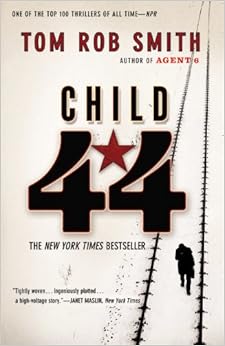
In this sequel to Child 44, British author Tom Rob Smith picks up with Leo Demidov three years after he's established the Homicide Division within the KGB, formerly the MGB. The Homicide Division is not held in high regard, but Leo cannot conscientiously work for the government doing anything else after the events in Child 44. 

The first scene in the book is actually a significant flashback to when Leo first started his work with the MGB. It is this scene that informs much of what transpires in The Secret Speech, and provides additional background for Leo. Initially, the link is unclear, but as events unfold the reader is pulled into the know. It's hard to forgive him for his blind obedience, but Leo's character is still pursuing his redemption; an arc that I imagine is resolved in the final book of the trilogy.

The speech referenced in title refers to Soviet leader Nikita Khrushchev's 1956 address admitting Stalin's crimes. The speech is anonymously dropped off at a print press, deposited into every teacher's mailbox, and leaked through various other methods. At a time when propaganda and fear held the Soviet Union together, the speech was viewed as a serious threat. A threat that soon becomes clear when dead bodies start to turn up. Leo's team begins an investigation into deaths of previous MGB officers and other high ranking officials seemingly linked to crimes named in the speech. The speech is used as a catalyst to create social unrest, exposing these men who condemned their comrades to the gulags, torture, and death. It's clear that there is an underground movement taking place in an attempt to exacerbate the dissolution of the Soviet Union.

Wednesday, May 6, 2015

Movie vs. Book: "Child 44: Where it Fell Short"

I recently reviewed the book Child 44 written by Tom Rob Smith, which you can read here. I didn't have much in the way of criticism for the book. I thought there was a balanced level of suspense, historical revelation of Soviet Union horrors, and character development. The psychological components of brainwashing, post traumatic stress disorder, fear, greed and psychopathic behavior were not clinical, but they definitely hit on all the right notes to bring the human struggle to life while propelling readers through an unrelenting thriller.

However, as is often the case, something was lost in the recent film adaptation of the book. If you haven't read my Movie vs. Book comparisons before, I feel it's important that you understand I am very open minded and I embrace the art of adaptation. I find adaptation an art form in itself. How do you take this finished and best-selling piece of literature and translate it to a different art form? It requires hard decision making, cuts, streamlining and simplification.

I've read that many book authors opt not to translate their own works into screenplays because of how different the writing medium is from writing a novel. In screenplays you have to break down the story and lay out the bare bones, "kill your darlings," and then leave room for the director's cut and vision. It would be hard to do that to a piece of work that you labored over in order to achieve the sense of finality; enough so, at least, to offer it to the world as a completed work. Some author's have been up to the task, most recently Gillian Flynn wrote the screenplay for Gone Girl and her adaptation was incredible.

Tuesday, April 21, 2015

Book Review: "Child 44" by Tom Rob Smith

As the first installment in a trilogy, Tom Rob Smith's Child 44 was an intriguing historical thriller that I couldn't stop reading. A friend first mentioned the book to me as a passing recommendation, and then I saw the preview for the film based on the book starring Tom Hardy. In true fan girl fashion, and what has become my preferred way to view films based on books, I sought out a copy of Child 44.

Initially, I didn't know what I had gotten myself into as the book started out with a scene that seemed disjointed from the main narrative. The book starts with a scene following two brothers as they try to trap and kill a stray cat in the woods so they can bring it home to their mother and eat it. They are starving, it's the middle of WWII, and the people of Russia have resorted to things worse than eating rats to survive the unrelenting hunger.

Then, the narrative shifts and we are vaulted twenty years into the future. The third person omniscient point of view allows the exploration of many of the character's thoughts, but the narrative most closely follows a high ranking M.G.B. officer by the name of Leo Demidov, whose perspective is shaped by the brain washed blur of Stalinism. As a member of the secret police, Leo fears his own colleagues and upward mobility as much as the general public fears him. To the reader, and to the general public of Stalinist Russia, Leo is a symbol of all that is wrong with the Soviet Union. I began to question why I was following this man and his blind belief for such a flawed ideology.

Wednesday, April 1, 2015

Book Review: "Ready Player One" by Ernest Cline

In times of national economic upheaval the public seeks escapism. Some have credited Shirley Temple films with helping pull the nation's mood up out of the Great Depression. In this day and age we are no strangers to the economic chaos that surrounds us and the faceless corporations that seem to be gaining more and giving less. Ernest Cline's Ready Player One is strangely visionary in that it provides us with a foreboding future in which nearly all of humanity is destitute and starving. Their only escape is an immersive virtual world called the OASIS, but now even that is at risk of being taken over by a corporation that wants to make the OASIS exclusive and expensive.

The OASIS was developed by a brilliant billionaire with Asperger's by the name of James Halliday. Halliday invents the OASIS as a place where people can go and interact and learn under assumed identities using Avatars. The OASIS grows, spawning worlds full of games and challenges, but it also has its practical uses for business, news, and education. The most important thing to the protagonist of the story, Wade Watts, is that education in the simulated world is free. Not just free of cost, but free of bullies that made his real-life schooling experience a nightmare. 

What sets this story into motion is the death of James Halliday. For it us upon this fateful day that Halliday's avatar Anorak, announces to the world that he has arranged a contest open to everyone within the OASIS to uncover the Easter Egg that is the key to his fortune and power over the OASIS. Halliday programs three keys to three gates within the expansive universe of the OASIS, and he provides the public with the first clue to find the first key. And thus the race for the Egg begins. 

Friday, March 20, 2015

Book Review: "The Girl on the Mountain" by Carol Ervin

It's 1899, and May Rose Long has just been abandoned by her husband in the mountains of West Virginia. Isolated from the logging town of Winkler and ostracized by the townspeople due to rumors of indecent behavior; May Rose tries desperately to connect with her family that headed West to Fargo, North Dakota.

Ervin is capable of creating a story around May Rose that is surprisingly entertaining and revealing of the position of women in society during this time in history. May Rose is known as the Girl on the Mountain because she is accused of standing naked and waving at the train of logging men as they passed her house every day. The rumor is the catalyst for everything that happens in the story, including her husband's disappearance. But May Rose was far from happily married, and while her husband kept her secluded from the town, buying the cabin with her dowry, she had only herself to rely upon most of the time while he stayed in the logging camp.

Ervin captures the grueling details of May Rose's survival and shows a vast knowledge of what mountain life consists of in the late 19th century. I was able to get a real feel for the setting and loved the descriptions of May Rose's different labors; from gardening to raising hogs and washing clothes. When May Rose's husband does not come home and she finds out what happened to him, a new part of her character opens up. We discover she's an intelligent woman and quite capable of forging her way into town and coming up with her own plan of survival.

Tuesday, March 17, 2015

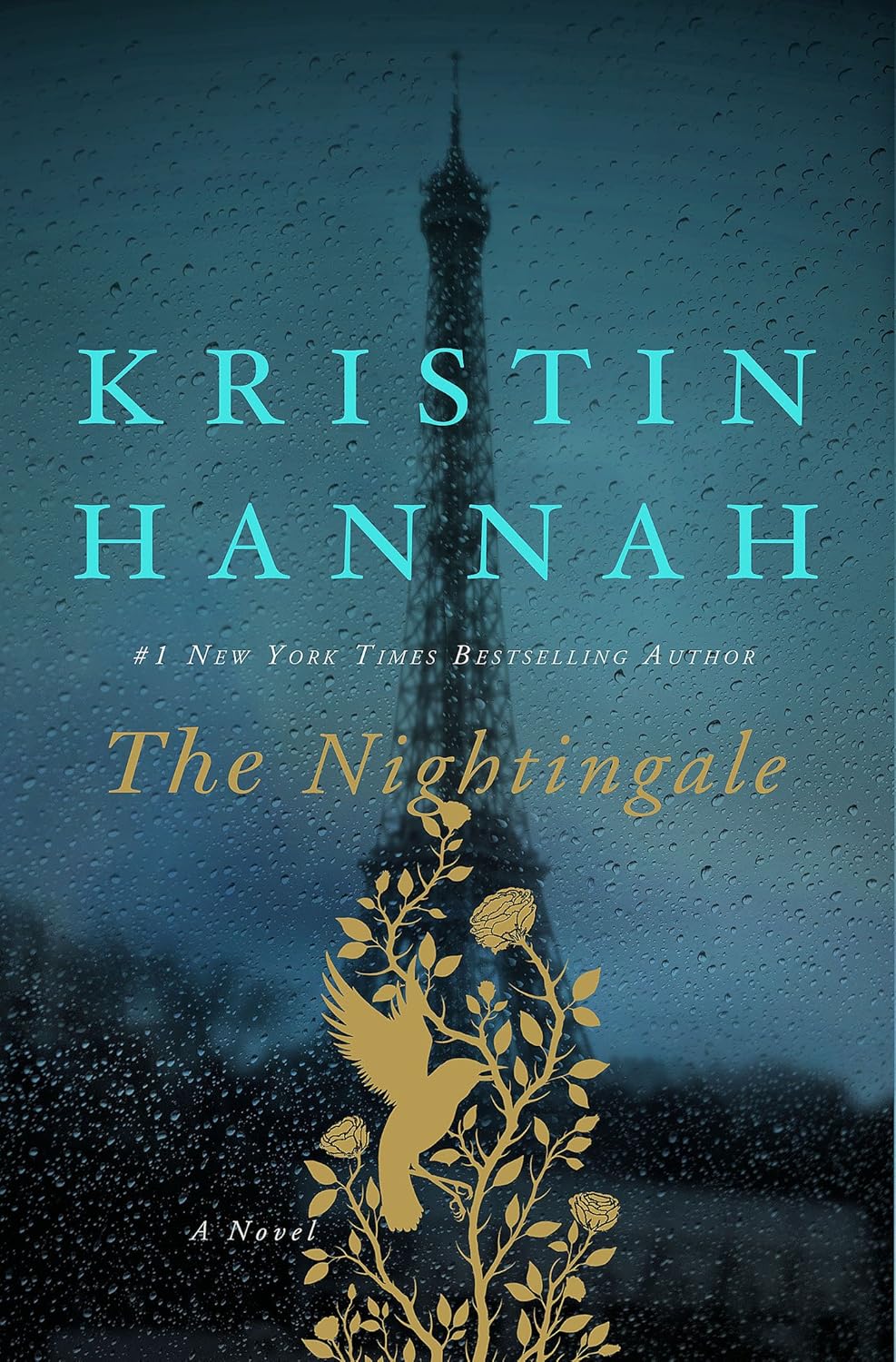
"The Nightingale" by Kristin Hannah

"If I have learned anything in this long life of mine, it is this: In love we find out who we want to be; in war we find out who we are."

Kristin Hannah opens her newest novel, The Nightingale, with this sentence that acts as the driving theme in her WWII portrait of women during war. Hannah's main characters are sisters with a fractured past. Their bond is tenuous before the war, and nearly breaks entirely once the Nazi's invade France. The elder sister is Vianne Mauriac, a devoted mother and wife who fights her war at home in Carriveau, where a Nazi has billeted at her home while her husband is in a work camp in Germany. Isabelle Rossignol is the impetuous younger sister whose anger about the war drives her toward the French Resistance. 

The Nightingale is by no means literary fiction. When I say that, I mean that there is no prose so beautiful that it resonates with your soul, however, this is an excellent story with an emotionally powerful narrative. Hannah's body of work up until this point has dealt with interpersonal relationships and emotional "chic-lit." The Nightingale has taken Hannah's storytelling to a different level. The writer even admitted in an interview with Goodreads that this story was the most difficult for her to write, but it was a story that would not let her rest.

Wednesday, March 11, 2015

Book Review: "Station Eleven" by Emily St. John Mandel

Emily St. John Mandel's fourth novel, Station Eleven, arrived with much anticipation among fans of the dystopian genre. With as saturated as the dystopian genre (or Speculative Fiction) is at the moment, Station Eleven definitely stands apart from the rest, but not in the way you would expect.

The story begins with a death. A famous 51-year-old actor by the name of Arthur Leander drops dead on stage of a massive heart attack during a performance of Shakespeare's King Lear. The actor's tragic death is soon overshadowed when a pandemic called the Georgia Flu effectively wipes out about 99% of the world's population. The web of characters that this story focuses on are all connected through Arthur Leander. Mandel does an excellent job of dropping hints, piquing interest and weaving this web of interconnection which snaps into focus at the climax of the story.

The character perspectives change as the story unfolds, so parts of the story take place before the world is forever altered by the Georgia Flu. In these chapters we get to know Arthur, his upbringing, his struggle as an actor, and the turbulent relationships with his many wives, but mainly his first wife, Miranda Carroll. Miranda, hailing from the same tiny island as Arthur, is fresh out of an abusive relationship when Arthur sweeps her away to Los Angeles. L.A. life could not be any less suited to anyone as it is for Miranda, and she throws herself into her creative endeavors to escape the resultant unhappiness of her lonely marriage.

Tuesday, February 24, 2015

Book Review: "Serena" by Ron Rash

Ron Rash's acclaimed novel Serena (2008) was a unique reading experience. I've been thinking about how to write this book review for a while now because of how mixed my feelings are about the whole of the novel. I liked it, however, there was a tension thrumming beneath the story the entire time that I felt was never fully realized. The amount of tension achieved with the use of symbolism, fatalism, mounting greed and obsession was all brought to a climax that didn't measure up to the painstakingly deliberate rising action. This is my opinion of course, and I'm sure there are many people who would disagree.

Serena takes place just after the stock market crash as the country dives deep into the Great Depression. The story is set in the mountains of Western North Carolina where Mr. Pemberton has just arrived with his new bride, Serena. The power couple intend to strip the mountains of its lumber and exploit the cheap labor of the locals and travelers who arrive in boxcars every day.

The story is told in alternating limited third person perspective, but none of those perspectives are those of the title character. Rash's decision to eliminate Serena's voice elevates her to more of a force that preys on and plagues the lives of the characters we do get to know. It's a bold choice. Is it entirely successful? I think that depends on the reader.

Monday, February 9, 2015

Show vs. Book: "Outlander: A Book Made Better"

I wanted to like this book. It came highly recommended and a couple of social media friends were astonished I'd never read it. When I finally started reading Outlander by Diana Gabaldon, I was actually very surprised at how difficult it was for me to feel engaged in the narrative. The story, the plot, is very interesting, but the actual narrative delivery fell woefully flat for me as a reader. I felt as though there was no tension in the text and no heightened emotion experienced by the narrator Claire Randall. I mean, the woman fell through a rock with mystical power and lands 200 years in the past and yet I didn't feel a thing from her emotionally...I didn't care.

I pushed myself to read this book, because I wanted to like it. It's well researched, and the actual history of the English dominion over Scotland and the rebellion that was to follow was appealing. I also enjoyed learning about Clan politics. Claire, who'd been a field nurse for Britain in WWII, has a knowledge of healing and herbal remedies, so I liked that aspect of the book as well. But I had a huge problem with Claire. Even though she'd had an interesting childhood traveling around with her archaeologist uncle, had been a nurse, was sexually aware and had fallen through time after witnessing an ancient Druid ceremony - I found her to be an incredibly one note character.

Saturday, January 3, 2015

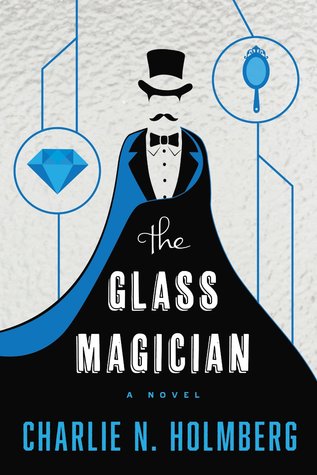
Book Review: "The Glass Magician" by Charlie N. Holmberg

I was really looking forward to this sequel to Holmberg's The Paper Magician, which I reviewed here. The first book served as an introduction to Holmberg's magical world in which magicians bond with specific materials through which they work their magic. However, the first story left me wanting in many areas of world building and character development. I gave Holmberg some leniency in my review because this was her debut novel and I held out hope that the sequel would fill in some of those areas of weakness.

The Glass Magician picks up shortly after the events of the first book, and we once again follow Ceony Twill through her apprenticeship with Emory Thane, The Paper Magician. Ceony's feelings for Thane have blossomed into a love that she eventually convinces herself to be one-sided. Her feelings for Thane become her mind's preoccupation, and the lovesick internal monologue grows a bit tedious. The only thing that distracts Ceony from her pining are the very imminent death threats and attempts on her life.

Wednesday, December 31, 2014

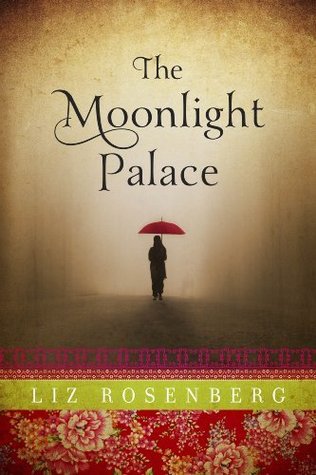
Book Review: "The Moonlight Palace" by Liz Rosenberg

I'm a fan of historical fiction and book deals, so when Liz Rosenberg's The Moonlight Palace popped up on my Amazon recommendations - I bought it. I actually ended up getting a discounted Audible version of the story as well and started listening to it on my daily commute. I really enjoyed listening to a professional narration with correct annunciation and the performance of accents - it really brought the story to life in my mind.

The Moonlight Palace is narrated by a teenager by the name of Agnes "Aggie" Hussein. Aggie lives in Singapore in the 1920's in a dilapidated palace called the Kampong Glam. The Hussein family was once a kind of royalty and the palace was once an opulent relic handed to her family in exchange for the family handing Singapore over to the British. Now the family lives in poverty, the palace is in ruins, and Aggie is facing the very real possibility that she may lose her family home; a home that is ingrained in her blood.

Monday, December 22, 2014

Book Review: "Slaughterhouse-Five" by Kurt Vonnegut

I've been trying to catch up on some of the classics I never read in school, and Slaughterhouse-Five is one of those books. I'm actually glad I didn't read this in high school, because I wouldn't have been able to comprehend all of its themes. Part autobiography, part absurd, part satire, part science fiction and part war drama - this isn't a story that fits neatly into any specific genre. I can imagine that the first mention of Billy Pilgrim coming unstuck in time and his alien abduction by the Tralfamadorians would cause some readers to close the book and push it away. However, it is this plot aspect that not only functions as an example of Billy's war warped mind, but also as a narrative tool used by Vonnegut to tell a non-linear story.

The narrator of the story is Kurt Vonnegut, he doesn't call himself Kurt Vonnegut, but after listening to an interview with him, I can say with authority that the narrator is a man writing a story about a man writing a story about the WWII massacre at Dresden (very postmodern meta-fiction). The frame story is told in first person perspective and introduces us to the historical event that was the fire bombing of Dresden, Germany. The narrator/Vonnegut talks about how hard it has been to write a story about Dresden, "because there is nothing intelligent to say about a massacre." So what follows is Vonnegut's disjointed tale of Billy Pilgrim that doesn't feel disjointed at all, but rather a well composed and complete story that isn't told in chronological order. You have to be a really good writer to pull off this kind of story telling and make your reader feel like the story couldn't have been told any other way, despite the absurdity of it all. 

Monday, December 15, 2014

Book Review: "The Paying Guests" by Sarah Waters

There was once a time when I despised British Literature. I declared my track in college as "Contemporary American Literature," and left the likes of Tristam Shandy and Pamela in my dust. I appreciated the Romantic and the Gothic era, but I still preferred American Lit. However, I really love what's coming from British writers these days. Kate Atkinson's Life After Life, pushed me into a new reading pool that I absolutely adore, and Sarah Waters has now deepened my affection.

The Paying Guests takes place in London in 1922. Anything written between 1900-1945 already has my attention because I'm fascinated by this time in History. London is still in tatters after the first World War, veterans are broken men with menial prospects, and once prominent families face the reality of their wavering wealth. Frances Wray lives in the upper-class neighborhood of Champion Hill, only with the loss of her two brothers in the war and her father to bad health, she and her mother are left with a large old house they can't afford and a former lifestyle they can't maintain. The Wrays lost their wealth due to bad investments and now must take on "paying guests" to stay afloat. 

Tuesday, December 2, 2014

Book Review: "Wild" by Cheryl Strayed

There's something about the vulnerability inherent in the art of memoir that makes reading them an exploration of the human condition. My exposure to memoir has been limited, but every time one of these stories lands on my reading list I know I am in for a special kind of journey. Cheryl Strayed's Wild: From Lost to Found on the Pacific Crest Trail is a gritty and honest reflection of the author's months log journey by foot across California and into Oregon on the Pacific Crest Trail (PCT).

Strayed took to the trail during the great meltdown of her life. Her mother died from cancer at the age of 45 which sent her into a grief driven downward spiral resulting in cheating on her husband, a heartbreaking divorce and a heroin addiction. All of this is revealed to the reader in flashbacks as Strayed makes progress on the trail. Strayed's prose is deliberate and clear, which makes following this clueless 26-year-old on a dangerous solo journey through the pacific wilderness a little less infuriating than if she attempted to sugar coat all of her reckless decisions.

Wednesday, November 5, 2014

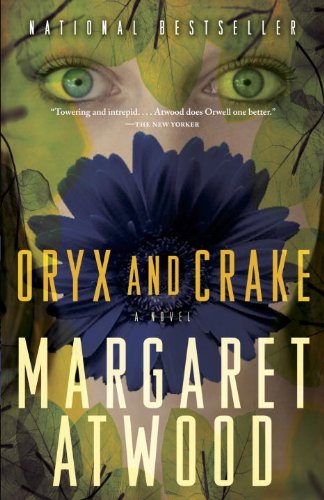
Book Review: "Oryx and Crake" by Margaret Atwood

Margaret Atwood's dystopian novel Oryx and Crake was published back in 2003. I don't know how I managed to read so much dystopian fiction, including Atwood's The Handmaid's Tale, and never came across this trilogy. I've remedied that oversight.

Oryx and Crake is set in the future and follows a man who goes by the name of Snowman who may just be be the last human alive. Snowman lives as a kind of guardian of the Crakers, a genetically modified humanoid species that he has liberated from their life in a dwindling habitat under a great dome of biological experimentation. As we follow Snowman's (Jimmy's) depressing daily routine and slow starvation we are introduced to his back story, and hence the back story of this broken world. The structure of the story clips back and forth between the story of Jimmy's childhood and early adulthood and Snowman's journey into wild territory to forage for survival supplies.

Some readers may not like the back and forth structure, but the sections flow seamlessly into one another. The pace is aided by this structure and is relentless in the unfolding of the greater story. Atwood excels in making Jimmy a well realized character with a childhood spent living in corporate science established compounds. These compounds are the gated communities of the elite set apart from the pleeblands where the general population resides. Such social stratification already exists in many ways, so Atwood is merely enhancing the nightmarish possibilities that could emerge from unchecked biological science and corporate influence.

Thursday, October 23, 2014

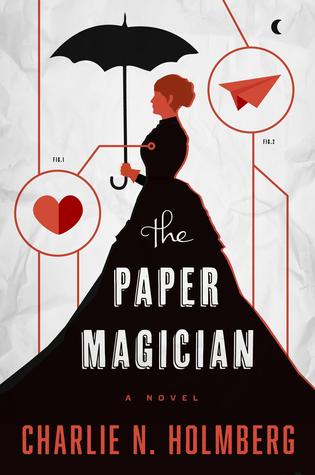
Book Review: "The Paper Magician" by Charlie N. Holmberg

Charlie N. Holmberg's debut novel, The Paper Magician, is the first installment in a series that I will definitely continue to read due to its undeniable charm. Harry Potter fans will likely enjoy this story for its glimpses of another structured magical world, and fans of Erin Morgenstern's The Night Circus will enjoy the whimsical romance element. The ease of read makes this a quick getaway when compared to something complex in terms of language like Susanna Clarke's Jonathan Strange & Mr. Norrell. So if you're looking for a story with some unique magic, romantic gestures, and the inherent darkness that accompanies power all steeped in a yet to be fully explored magical world, then this could be your next read.

Ceony Twill makes a compelling heroine in the story, showing up at Paper Magician Emery Thane's house to pursue an apprenticeship after graduating top in her class from a magical academy. However, Ceony's not too thrilled to be bonded to the element of paper as it was her dream to work with metal. And here is one of the most interesting parts of this world that begins to unfold: magicians magically bond with a particular object and from there on out their magic is worked through that object. Ceony begrudgingly makes her bond with paper, but her feelings toward folding, which is the paper magician's way of working magic, soon begins to change.

Sunday, October 12, 2014

Book Review: "If I Stay" by Gayle Forman

The experience of what is so commonly referred to as 'coming-of-age' defines a time in life when your decisions carry more weight in designing who you are and who you are becoming. Your parents are no longer the prime decision makers in your life, it is up to you to mold your future - it is the true release of childhood and all the careless freedom it now comes to represent. Gayle Forman's If I Stay is a compelling coming-of-age story embedded in a present moment narrative of unfolding tragedy.

Seventeen-year-old, Mia Hall, wakes up on a snow day from school surrounded by her now-tame punk rock parents, that sound a bit like Northwestern hipsters, and her adoring younger brother Teddy. It's Mia's senior year of high school and she views her family's warmth and eccentricity as one of the things she will miss most if she ends up going to college at Julliard in a few months. The family decides to take advantage of their stolen day off from the responsibilities of life, like giddy children, and use it to visit with friends and family in their Oregon hometown.