Showing posts with label Dystopian Fiction. Show all posts

Friday, November 20, 2020

Book Review: "Leave the World Behind" by Rumaan Alam

This book came highly recommended by a close friend of mine, and with the 2020 election over, I was more willing to lean into the dystopian atmosphere. I'm certainly glad that I did. As a reader, I found the book rewarding on several levels, and as a writer, I feel like Rumaan Alam's sentence structure and level of detail has forever changed my writing. 

The story starts out with Amanda and Clay, successful Brooklyn types, and their children as they head off to the remote reaches of Long Island to, you guessed it, leave the world behind. Those are the words from the rental ad for the house they are staying in. This first part of the story really allows you to get to know the family, and to unwind with them. There are subtleties to this first part of the book that make you take notice, such as the detailed list of chosen groceries. In a story where you know things are meant to go wrong, a list of groceries is like a hint that food supply will later become an issue. In this particular scene, Amanda is shopping for groceries during her vacation. There's no sense of precaution or urgency, which is a lovely way to build tension. 

Thursday, March 19, 2020

Book Response: "Parable of the Talents" Book 2 of the Earthseed Series by Octavia Butler

Have you ever picked up a book that seems like you were meant to read it at that particular time in
your life? Like, the book finds you and feeds your soul? It's one of the beautiful things that can happen to book readers. Less beautiful, but still filled with awe - recognizing an unfolding of events in a story written years ago that mimic what is happening in your own time. Case in point: Octavia Butler's "Parable of the Talents."

I picked up the first book in Butler's Earthseed series, "Parable of the Sower" as dystopian genre research for publishing my own dystopian saga. The first book in the series takes place on the West Coast as people take to walking the roads as civil unrest boils over and resources are depleted in southern California. It's a desolate picture of income inequality and global warming reaching a tipping point.

In the second book in the series, we pick back up with main character Lauren Olamina and her followers years after we leave her at the end of book one. The group has built a community, called Acorn, that all rests on the Earthseed principles that Lauren has been preaching. Earthseed is a religion based on fundamental truths about God. The first line in most of the passages is "God is Change," and Lauren means this quite literally. The world is built on impermanence and change and why wouldn't the force behind such a constant state of "becoming" be considered God?

Wednesday, March 11, 2015

Book Review: "Station Eleven" by Emily St. John Mandel

Emily St. John Mandel's fourth novel, Station Eleven, arrived with much anticipation among fans of the dystopian genre. With as saturated as the dystopian genre (or Speculative Fiction) is at the moment, Station Eleven definitely stands apart from the rest, but not in the way you would expect.

The story begins with a death. A famous 51-year-old actor by the name of Arthur Leander drops dead on stage of a massive heart attack during a performance of Shakespeare's King Lear. The actor's tragic death is soon overshadowed when a pandemic called the Georgia Flu effectively wipes out about 99% of the world's population. The web of characters that this story focuses on are all connected through Arthur Leander. Mandel does an excellent job of dropping hints, piquing interest and weaving this web of interconnection which snaps into focus at the climax of the story.

The character perspectives change as the story unfolds, so parts of the story take place before the world is forever altered by the Georgia Flu. In these chapters we get to know Arthur, his upbringing, his struggle as an actor, and the turbulent relationships with his many wives, but mainly his first wife, Miranda Carroll. Miranda, hailing from the same tiny island as Arthur, is fresh out of an abusive relationship when Arthur sweeps her away to Los Angeles. L.A. life could not be any less suited to anyone as it is for Miranda, and she throws herself into her creative endeavors to escape the resultant unhappiness of her lonely marriage.

Thursday, September 4, 2014

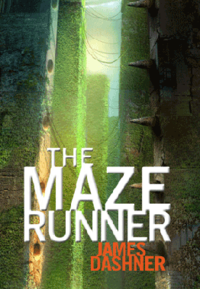
Book Review: "The Maze Runner" by James Dashner

If you haven't tired of young adults in peril in dystopian worlds, then James Dashner's The Maze Runner may be worth your attention. The book is packed full of action and fast paced turn of events that keep the pages turning. The Maze Runner definitely suffers from characters who are seemingly erratic and inconsistent in their emotional reactions to the events that unfold, and while I'd like to contribute this to the life threatening situations that arise (and hormones), I really felt this issue was embedded in the writing and wasn't true to the characters.

Despite some of these character attribute shortcomings, I was immediately drawn into the plot of the story. We follow the perspective of a teenager named Thomas as he wakes up in an elevator lift with no memory of his personal past. He knows his name and he thinks he knows his intuitive self, but as the lift doors open and he is thrust into a group of sixty teenage boys - his internal propulsion to find out what is going on goes against the society these boys have already constructed.